The No-Knead Bread Trap: What's Really Going Wrong on Your Counter
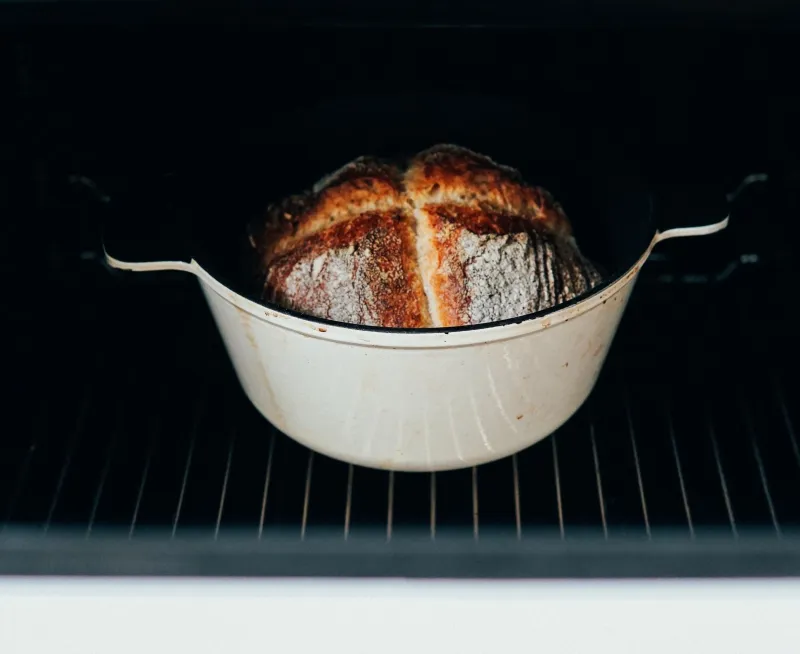
No-knead bread is supposed to be the great equalizer. No stand mixer, no complicated technique, no culinary school required. You stir a few ingredients together, walk away, and wake up to something that smells like a bakery. That's the promise, anyway.
For a lot of home bakers, the reality looks a little different — a loaf that comes out flat as a frisbee, dense like a brick, or gummy right through the middle. And the frustrating part? You followed the recipe. You did everything it said.
Here's the thing: no-knead recipes were largely developed and tested in controlled environments. Your kitchen isn't that. Your flour brand is different. Your tap water temperature varies. Your kitchen in January feels nothing like your kitchen in July. These recipes aren't foolproof — they're just forgiving enough that most of the time things work out. When they don't, the reason is almost always one of a handful of fixable problems.
Let's go through the big ones.
Your Water Is Working Against You
Water temperature matters more in no-knead bread than almost any other variable, and most recipes gloss right over it. The yeast in your dough is a living thing, and it has a comfort zone. Water that's too cold slows fermentation down dramatically — your dough sits there looking sad and barely rises. Water that's too hot (above about 110°F) can kill the yeast outright before it even gets started.
The sweet spot is roughly 70–75°F for a long, slow room-temperature ferment — which is what most no-knead recipes call for. If your kitchen runs cold (common in winter or in air-conditioned homes in summer), bump the water temperature up slightly, closer to 80°F. If your kitchen is warm, cooler water will help prevent the dough from over-fermenting before you're ready to bake.
A quick-read thermometer takes about five seconds to check. It's one of those small habits that quietly makes a big difference.
The Hydration Ratio Isn't One-Size-Fits-All
No-knead bread is a high-hydration dough, which is part of what makes it work without kneading. More water means more gluten development happens naturally over time. But here's where things get tricky: flour absorbs water differently depending on the brand, how it was stored, and even the humidity in your home.
If you're measuring flour by volume (scooping with a cup), you're likely getting more flour than the recipe intended. That throws off the ratio. Your dough ends up stiffer, the crumb tightens up, and the whole loaf suffers. The fix is simple — spoon your flour into the measuring cup and level it off, or better yet, use a kitchen scale. If your dough feels stiff and doesn't look shaggy and sticky after mixing, add water a tablespoon at a time until it loosens up.
On the flip side, if your dough is so wet it's practically soup, your flour may be absorbing less than expected. Add a small amount of flour until the texture looks more cohesive. It shouldn't be smooth — it should look rough and sticky — but it also shouldn't pour.
You're Not Giving the Fermentation Enough Respect
This is the part most people underestimate. No-knead bread relies almost entirely on time to build structure and flavor. The long ferment — usually 12 to 18 hours — is doing the work that kneading would normally do. Cut it short and you lose both.
Under-fermented dough doesn't have enough gas development to rise properly. The loaf comes out dense and pale. Over-fermented dough, on the other hand, gets slack and starts to smell almost sour or boozy. It can still bake up into something edible, but the structure gets weaker and the flavor tips into unpleasant territory.
How do you know when it's ready? Look for a dough that has roughly doubled in size and has a bubbly, slightly domed surface. If you're not seeing bubbles at all after 12 hours at room temperature, your yeast may be old or your kitchen is too cold. Try moving the bowl somewhere warmer — the top of the fridge, near a heating vent, or inside the oven with just the light on.
Your Dutch Oven Isn't Hot Enough
A Dutch oven is the secret weapon of no-knead bread. It traps steam during the first part of baking, which keeps the crust soft long enough for the loaf to fully expand before it sets. Without that steam, you get a tight, thick crust that prevents the bread from opening up — and often a doughy interior because the loaf couldn't rise properly in the oven.
The Dutch oven needs to be fully preheated before the dough goes in. Most recipes call for preheating it inside the oven at 450–500°F for at least 30 minutes. Don't skip this step and don't rush it. A cold or lukewarm pot is one of the most common reasons a no-knead loaf comes out flat.
Also worth checking: is your oven actually reaching the temperature you set? Oven thermostats are notoriously unreliable. An inexpensive oven thermometer (usually under $10) will tell you what's really happening in there. If your oven runs 25 or 50 degrees cool, you've been baking at the wrong temperature all along.
The Shaping Step Isn't Optional
No-knead doesn't mean no-handling. Before the dough goes into the Dutch oven, it needs a gentle shape — usually a fold-and-tuck method that builds a little surface tension. Skipping this step or being too rough with the dough deflates the gas bubbles you spent 12+ hours building.
The goal isn't a perfect boule. It's just a loosely rounded shape with a smooth-ish top. Fold the edges toward the center a few times, flip it over, and let it rest seam-side down. That's it. Two to three minutes of work that directly affects how the final loaf looks and rises.
A Quick Pre-Bake Checklist
Before your next attempt, run through these five things:
- Check your yeast — if it's been open for more than a few months, proof it in warm water with a pinch of sugar before adding it to your dough. It should foam within 10 minutes.
- Measure your flour by weight or use the spoon-and-level method — never scoop directly from the bag.
- Check your water temperature — aim for 70–80°F depending on your kitchen climate.
- Give your dough the full fermentation time — look for bubbles and doubling, not just the clock.
- Preheat your Dutch oven for a full 30 minutes — and verify your oven temperature with a thermometer.
None of these steps take more than a few minutes. Together, they cover the vast majority of reasons a no-knead loaf goes sideways.
The recipe really can be as easy as it sounds. It just needs your kitchen's specific quirks accounted for — and now you know where to look.