Your Baking Disasters Are Trying to Tell You Something — Are You Listening?
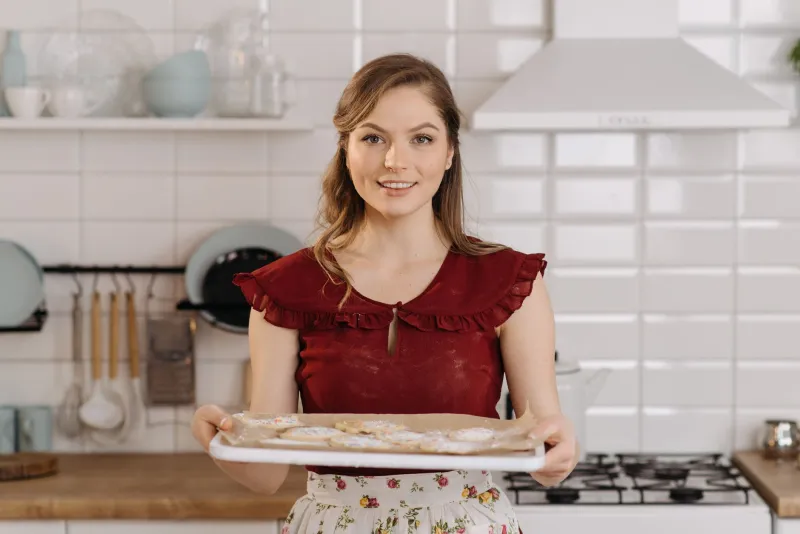
Let's be honest: nobody posts the failures on Instagram. The lopsided cake that slid off the plate, the cookies that welded themselves to the pan, the bread loaf that looked more like a deflated football — those usually end up in the trash, not on a cooling rack in soft afternoon light.
But here's the thing nobody tells you when you're first starting out in the kitchen: those disasters? They're doing more for your skills than a dozen perfect batches ever could.
The trick is learning to read them.
Burnt Edges Aren't Just About a Hot Oven
We've all pulled a tray of cookies out of the oven and found the edges looking somewhere between "golden brown" and "charcoal briquette." The instinct is to blame the oven — and honestly, sometimes that's fair. But burnt edges are usually telling you something more specific.
If only the outer cookies on the tray are scorched while the center ones look fine, that's your oven telling you it runs hot around the edges. Rotating your pan halfway through baking is the simple fix, but the real lesson is that your oven has a personality. Every oven does. Getting to know those hot spots is one of the most underrated skills in home baking.
If all the edges are burning regardless of position, you might be dealing with too much sugar in your dough (it caramelizes fast), a pan that's too thin, or a rack that's sitting too low. Each of those causes is a different lesson — and once you figure out which one it is, you won't forget it.
The Collapsed Middle Is Actually a Chemistry Lesson
Few things are more deflating — literally — than a cake that rises beautifully in the oven and then sinks the moment you pull it out. It looks like failure. It feels like failure. But a sunken center is one of the most informative things that can happen to your bake.
Most of the time, it comes down to one of three things: underbaking (the structure wasn't set yet when the heat left), too much leavening (yes, more baking powder can actually make things worse), or opening the oven door too early and letting the heat escape mid-rise.
The collapsed middle is essentially your cake showing you its internal timeline. It rose — meaning the leavening worked. It fell — meaning something interrupted the structure before it could hold. That gap between "rose" and "held" is exactly where your technique needs attention, and no amount of reading about it will teach you as clearly as watching it happen in your own oven.
Rubbery, Dense, or Gummy Textures Are Telling You About Mixing
Texture problems are sneaky because they're not visible until you cut into something or take a bite. A muffin that looks perfect on the outside but turns out dense and almost chewy? That's almost always overmixing.
When you mix flour-based batters too much after adding the dry ingredients, you develop the gluten — great for bread, not great for tender muffins or cakes. The batter looks totally normal. Nothing seems wrong. And then you bite in and wonder what happened.
Once you've made that mistake and connected it to the cause, you'll never forget to stop mixing at "just combined" again. That one gummy muffin teaches you something that a hundred smooth batches never would have.
Weird Flavor Combinations That Shouldn't Work — But Kind of Do
Not every kitchen surprise is a disaster. Sometimes you're out of vanilla extract, sub in a splash of almond extract, and discover that your usual banana bread suddenly tastes like something you'd pay $7 for at a bakery. Sometimes a pinch of instant espresso powder finds its way into your brownie batter and the whole thing becomes richer and more chocolatey than anything you've made before.
These happy accidents are just as instructive as the failures. They teach you about flavor layering — how certain ingredients amplify others, how small additions shift the whole profile of a dish. When something works unexpectedly, it's worth writing down why you think it worked. That's how intuition gets built.
And when a weird combination absolutely does not work — say, that time you thought cardamom would be great in a classic yellow cake and it very much was not — that's equally useful information about your own palate and how flavors interact.
The Bread That Didn't Rise Is Teaching You About Yeast
Flat bread is one of the most discouraging things to pull out of the oven, especially when you put time and effort into it. But a loaf that didn't rise is basically a direct report on what happened with your yeast.
Water too hot? You killed it. Water too cold? It never woke up. Old yeast that was past its prime? Same result, different cause. Each of these is a different lesson, and they're lessons that stick because you felt the disappointment. That emotional memory is actually a feature — it makes the knowledge durable.
Next time you proof your yeast, you'll remember. You'll test the water temp. You'll check the expiration date. You'll look for the foam that tells you things are alive and active. The flat loaf gave you that.
How to Actually Learn From a Mistake (Instead of Just Moving On)
The key is slowing down after something goes wrong. Instead of tossing the evidence and starting over, take a minute to think through what happened.
Ask yourself: What did it look like when it came out? What did it taste like? What was I doing differently this time — different pan, different oven temp, different brand of flour? Write it down somewhere, even just a note in your phone. You don't need a formal baking journal (though those are great if you're into it). You just need a record that your future self can reference.
The goal isn't to become a food scientist. It's to build a relationship with your kitchen — to understand your oven, your pans, your preferences. That kind of knowledge can't come from a recipe alone. It only comes from showing up, trying things, and paying attention when they don't go the way you expected.
Mistakes Are the Curriculum
Every baker you admire — professional or otherwise — has a mental archive full of failures. Cakes they couldn't salvage, bread they had to throw out, cookies that went straight from the oven to the bin. Those experiences are exactly why they're good now.
The kitchen is genuinely one of the best places to fail, because the stakes are low and the feedback is fast. Something goes wrong, you eat the evidence (or you don't), and you try again. That loop — attempt, observe, adjust — is how real skill gets built.
So the next time something comes out of your oven looking nothing like the photo in the recipe, try not to feel defeated. Feel curious instead. Something in there is trying to teach you, and if you're paying attention, you might just come out of it a better baker than any perfect batch could have made you.